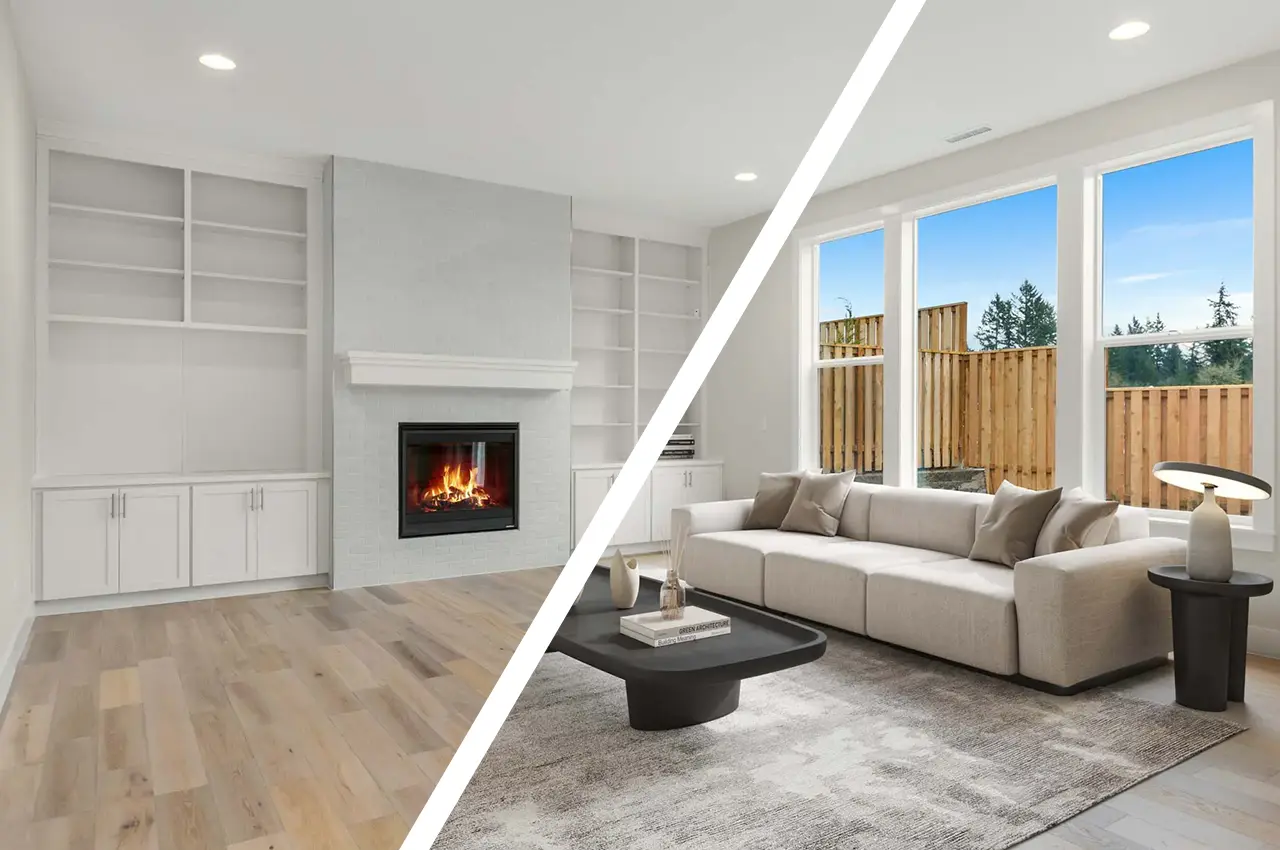

Staging choices that shape your listing—and your brand.
Real estate loves a before-and-after moment.
But here’s the twist: the real magic of a “transformation” doesn’t start in editing. It starts with how the space is staged—or not staged—long before a photographer sets foot inside.
And in today’s market, staging isn’t just about making a property look good.
It’s about maximizing content value. One shoot becomes photos, reels, lifestyle clips, agent promo assets, neighborhood features… the whole marketing ecosystem.
So which option gives you the most mileage:
Unstaged • Virtually Staged • Physically Staged?
Let’s compare.
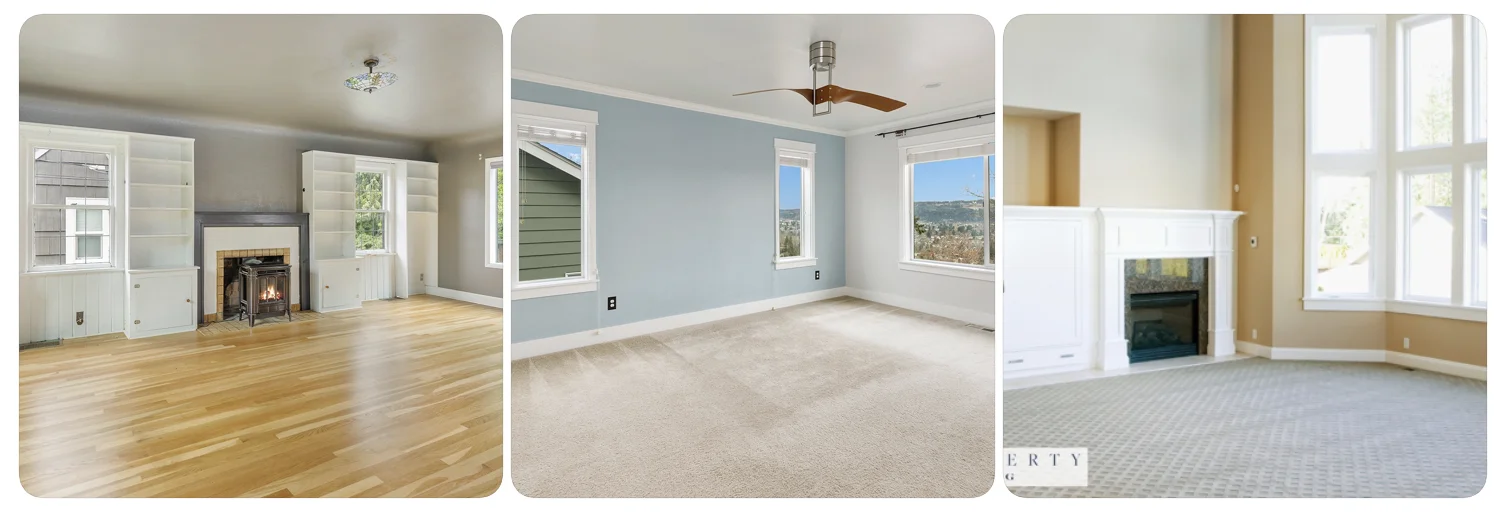
1. Unstaged: The Honest Truth (and When It’s Actually the Right Move)
Pros
- Fast + flexible. Great for rentals, flips mid-renovation, or when time simply isn’t on your side.
- Lower upfront cost. Nothing to move in or out.
- Accurate representation. Buyers see the true bones of the property.
Cons
- Zero emotional pull. Most buyers struggle to estimate scale or imagine furniture.
- Harder to capture lifestyle content. Reels of empty rooms feel… empty.
- Branding value: minimal. You can’t film lifestyle shots around an invisible island.
Best Use Cases
- Investor listings
- Pre-staging “Coming Soon” teasers
- Properties that will later get virtual or physical staging
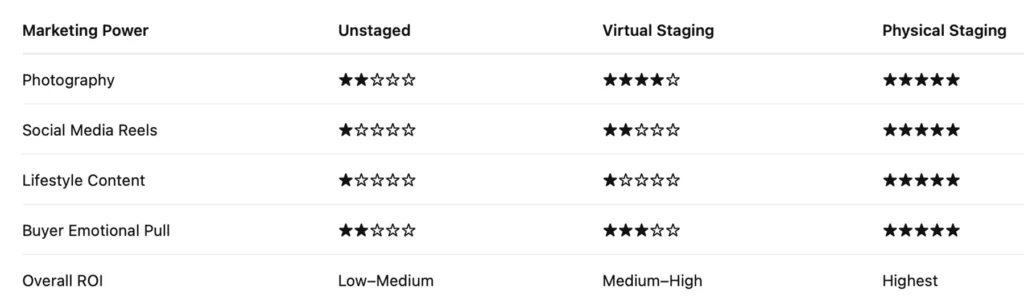
Bottom line: Unstaged works, but it limits your marketing impact.
2. Virtual Staging: Digital Furniture, Real Impact
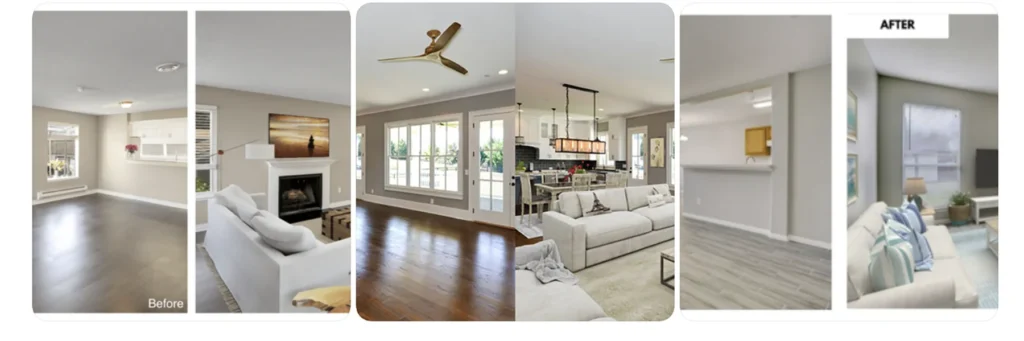
Virtual staging used to be a novelty. Now it’s a strategic tool—especially when paired with pro photography.
Pros
- Highly cost-effective. One empty room becomes multiple style variations.
- Perfect for online-first buyers. Scroll-stopping visuals with quick turnaround.
- Flexible. Try modern, luxury, coastal, Scandinavian—no furniture required.
- Great for agent marketing. Ideal for showing your process in carousels and educational content.
Cons
- Requires a clean, photo-ready space. Virtual staging can’t fix everything.
- In-person expectations can differ. If buyers expect the staged version, emptiness can feel disappointing.
- Not usable for video or lifestyle content. The room is still empty in real life.
Best Use Cases
- Vacant properties
- Budget-conscious sellers
- Condos + smaller homes needing clarity of scale
- Builders pre-marketing new inventory
Bottom line: Virtual staging strengthens the online story, but not the in-person one.
3. Physical Staging: The Premium Path—and the Most Marketable One
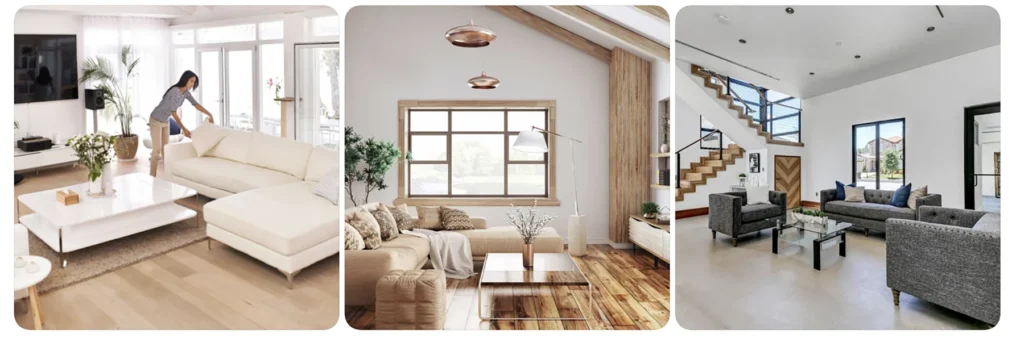
Physical staging remains the strongest tool for impactful media and memorable impressions.
Pros
- Creates immediate emotional connection. Buyers can imagine life in the space.
- Maximizes every visual format:
- Photography
- Video walkthroughs
- Reels and vertical content
- Lifestyle shots
- Agent-on-camera branding pieces
- Elevates agent branding. A polished listing reflects directly on your marketing approach.
- Unlocks richer storytelling. Photographers and videographers can build narrative and flow.
Cons
- Higher upfront investment. Worth it, but not always feasible.
- Requires coordination. Stagers + cleaners + photographers.
- Not ideal for every listing. ROI varies depending on condition and price point.
Best Use Cases
- High-visibility listings
- Luxury and new construction
- Agents wanting long-term brand assets
- Competitive markets where presentation wins
Bottom line: Physical staging delivers the highest return across platforms and for agent branding.
Side-by-Side Comparison
Why This Matters More in 2026
Agents aren’t just selling homes—they’re selling presentation, value, and experience.
Every listing becomes an opportunity to strengthen your brand and build a library of reusable marketing content.
It’s a strategic multiplier.
Staging isn’t a line item.
Ruum Media’s Take: Where Good Media Becomes Great
Professional photography can capture a space.
Staging transforms it.
Together, they create visuals that attract attention, build trust, and elevate an agent’s marketing across every platform.
A prepared space isn’t just easier to photograph – it performs better everywhere your clients are looking.
Online, in-person, and across your long-term brand identity.